
The articlegameplay, story, development, reception
Gameplay
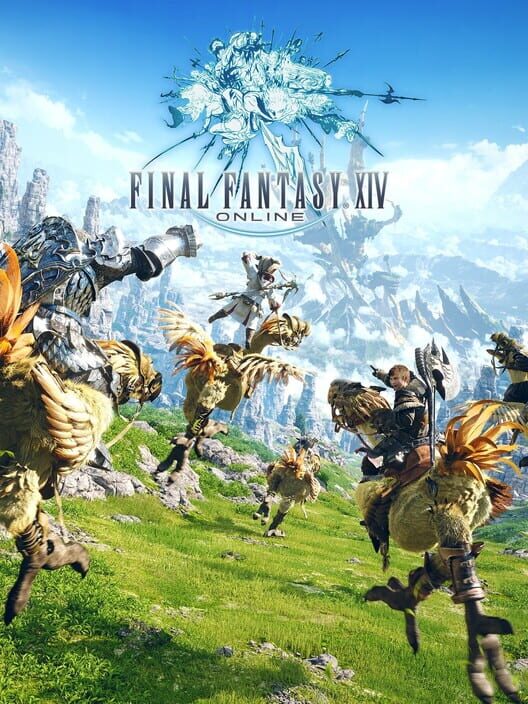
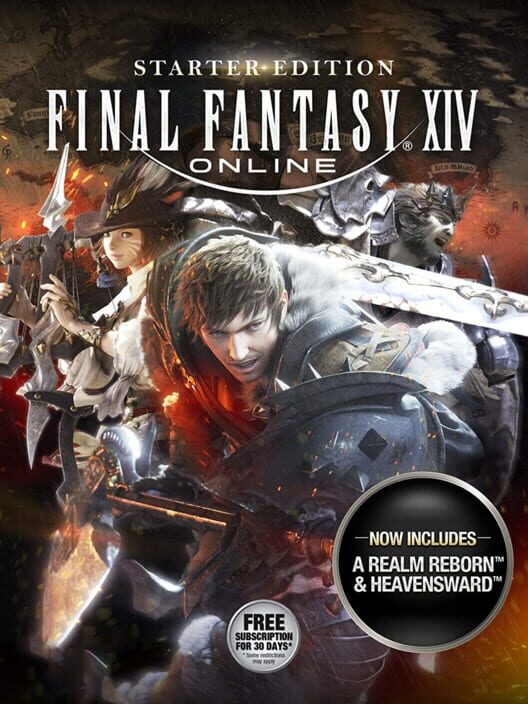
Final Fantasy XIV is an MMORPG, featuring a open world where players can interact with each other and the environment. Players create and customize their characters for use in the game, including name, race, gender, facial features, and starting class. Unlike in the original release, players may only choose to be a Disciple of War or Magic as a starting class—Disciples of the Hand and Land are initially unavailable. Players must also select a game server for each character.
, North America, Europe, Japan, and Oceania) to reduce latency between client and server, and players are advised to choose a server in their region. Regardless of server or language, players can use a large library of automatically translated game terms and general phrases, allowing players who speak different languages to communicate.
PC and home console versions use a unified user interface (UI) and control scheme allowing for any combination of keyboard, mouse, and game controller. On PC, the game defaults to drag and drop menus, whereas on the console versions, the default interface resembles the PlayStation 3's XrossMediaBar. This bar is used to access menus, maps, logs, and configuration options. The head-up display for both versions includes a message log, party status menu, mini-map, and action bar. The size and location of all UI elements may be customized.
Actions and battle commands differ between PC and console versions. The PC versions support both point and click and keyboard input for commands or macros. Macro commands are customizable sequences of actions that allow players to execute desired abilities at a specific time. The home console versions instead map the action bar and macros to the "Cross Hotbar"—sets of four icons arranged in a cross shape.
These are the grouped and accessed through a combination of the shoulder buttons and the directional pad or the face buttons. Using each shoulder button to cycle through the cross sets, players have quick access to commands. This interface is also available to PC players who use controllers.
Players improve their characters by gaining experience points (EXP) and acquiring stronger equipment. After gaining enough XP, the character will "level up", improving their statistics, enhancing the character's performance, and often learning new actions. Primary sources of experience points in Final Fantasy XIV include completing quests, exploring instanced dungeons, participating in Full Active Time Events (FATEs), and slaying monsters in the world. Quests, including the "main scenario" questline, are generally short, specific tasks given to the player by non-player characters which reward items and EXP.
Completing main scenario quests progresses the overarching plot of the game. Some quests are repeatable, either "daily" quests repeatable each day, or "Levequests", which consume "leve allowances" that the player slowly accrues over time. Dungeons often require multiple players to form a party to enter, but the Duty Support system enables the player to play certain dungeons alone, supported by computer-controlled party members. Some dungeons are for lower-leveled players to gain EXP quickly while others are for experienced players to collect rare items, equipment, and currency.
The Duty Roulette system randomly assigns the player to an accessible dungeon, and once per day, awards additional bonus EXP scaled to character level on completion. FATEs permit large groups of players, whether or not they are in a party, to participate in a shared task in the world. These location-specific events include battles with notorious monsters, defending locations, escorting non-player characters, culling wildlife, and assaulting enemy fortresses, among other types. Finally, each enemy the player kills provides EXP, with further EXP available from the Hunting Log, for killing a fixed amount of specific creatures.
At maximum level, character progression focuses entirely on acquiring stronger equipment, raising the character's "item level". This equipment can be gained through a variety of sources including endgame dungeons, crafting, raids, primal battles, and elite mark hunts.
In addition to these player versus environment (PvE) challenges, various forms of player versus player (PvP) combat exist in Final Fantasy XIV. The Feast was an arena featuring structured four-versus-four battles where a player could register with up to three teammates to challenge another four-person team. 1, when it was replaced with Crystalline Conflict, which consists of two teams of five competing to seize control of and push a crystal which starts at the middle of the arena to each team's goal point. The second type, Frontlines, is a large battleground in which players form teams of up to 24 members.
Teams are delineated by players' allegiance to one of three Grand Companies and the team which reaches the target number of points first wins the match. Multiple modes are available, each with differing locations and rulesets. Within the game, Frontlines is presented as an organized set of military exercises between the three nations with the ulterior goal of jockeying for dominance of regions rich in magical artifacts. The third type, Rival Wings, is a battle arena mode where players manipulate minion waves and pilot mechs to destroy enemy objectives.
PvP matches grant unique currency separate from the main currency "Gil." The PvP currency may be exchanged to obtain exclusive items, including armor and weapons.
Players fight enemies using a combination of physical attacks, weapon skills, and magical attacks; these battles form the basis of party play in Final Fantasy XIV. Most battle content in the game requires parties of a specific size, including four players for dungeons and eight players for boss battles. The "Duty Finder" is an automated matching feature
Story
Final Fantasy XIV is set on Hydaelyn, a fictional world of diverse environments across multiple continents, focused on the region of Eorzea. Eorzea features four prominent city-states: Gridania, in the heavily forested Black Shroud; Ul'dah, a trade-centric sultanate in arid Thanalan; Limsa Lominsa, a thalassocracy on the island of Vylbrand; and Ishgard, an isolationist theocracy in snowy, mountainous Coerthas. A land bridge links Eorzea to two other continents to the east, which have largely been conquered by the Garlean Empire. Other societies include indigenous tribes, such as Ixali and Kobolds; Sharlayan, a scholarly city; and Ala Mhigo in eastern Eorzea, annexed twenty years prior by the Garlean Empire.
Facing Garlean invasion, Ishgard withdrew from the Eorzean Alliance, leaving it defunct. The once-vibrant Mor Dhona region was devastated during the previous Garlean campaign.
Eorzean history is divided into prosperous "Astral" eras, and disastrous "Umbral" eras caused by great Calamities. The First Umbral Era marked the end of the age of gods. The Twelve, guardian deities of Eorzea, retreated from direct mortal contact. As society recovers from Umbral eras, new Astral eras begin.
Under the hegemonic Allagan Empire of the Third Astral era, technological development reached its zenith, including aerospace construction. As each Calamity was linked to one of the six fundamental elements—air, lightning, fire, earth, ice, and water—the Sixth Astral Era was expected to last forever, but five years ago, the Garlean Empire triggered the Seventh Umbral Calamity.
Garlean scientists working on Project Meteor weaponized the lesser moon Dalamud. Under Legatus Nael van Darnus, they would annihilate Eorzea by crashing the moon, exterminating all opposition. The Alliance reunited in response, reviving their Grand Company militaries. Adventurers defeated van Darnus but could not stop Dalamud's descent.
At the Battle of Carteneau Flats in Mor Dhona, Dalamud revealed itself as an ancient Allagan prison for the primal dragon Bahamut; his escape triggered the Seventh Umbral Calamity. Louisoix Leveilleur called upon the Twelve to imprison Bahamut, but failed; before he sacrificed himself to defeat Bahamut, he sent the adventurers "beyond the reach of time" for when they were needed again. Meanwhile, the Empire became paralyzed by a succession crisis as the elderly Emperor Solus fell ill.
The player character is an Eorzean adventurer during the Seventh Umbral Era who joins one of the Grand Companies: Gridania's Order of the Twin Adder, under Elder Seedseer Kan-E-Senna; Ul'dah's Immortal Flames, under Flame General Raubahn Aldynn; and the Maelstrom of Limsa Lominsa under Admiral Merlwyb Bloefhiswyn. Their allies include Minfilia and her Scions of the Seventh Dawn, a rebuilt Sixth Astral Era organization uniting Louisoix's Circle of Knowing and Minfilia's Path of the Twelve. Members include Thancred, Yda, Papalymo, Urianger, and Y'shtola. Y'shtola often represents Final Fantasy XIV in crossovers like Theatrhythm Final Fantasy: Curtain Call and Dissidia Final Fantasy NT.
Louisoix's twin grandchildren, Alphinaud and Alisaie, follow his example to aid Eorzea. Finally, Cid Garlond heads Garlond Ironworks, a technology company providing airships, weapons, and infrastructure to the Alliance.
Garlean antagonists include Legatus Gaius van Baelsar of the XIVth Imperial Legion and his lieutenants, Livia sas Junius, Rhitahtyn sas Arvina, and Nero tol Scaeva. The tribes also threaten the uneasy peace by summoning primals, aetherial deities which drain the land's life-sustaining energy. Both are manipulated by the Ascians, hooded immortals hellbent on awakening their dark god Zodiark, imperiling all of Hydaelyn.
The game opens with a vision of the player character defeating a masked, black-robed man. The adventurer awakens shortly before arriving at the starting city, Gridania, Ul'dah, or Limsa Lominsa. Returning players from the original version appear in a column of light. Through odd jobs and tenacity, the player joins the city's Adventurer's Guild, and is favorably compared to the "Warriors of Light" who vanished in the Seventh Umbral Calamity.
The adventurer thwarts attacks by mysterious masked men and earns the attention of the Scions. Minfilia reveals the player's visions are the Echo, a power marking chosen representatives of Hydaelyn, the deity for whom the world is named.
Freshly inducted, the adventurer and Thancred investigate abductions and crystal thefts in Thanalan by the Amalj'aa tribe, who capture the player for their primal, Ifrit, to enthrall, but the Echo blocks Ifrit's "tempering". Instead, the adventurer defeats the primal, and is hailed a hero, courted by all three Grand Companies. During memorial services for the Battle of Carteneau, the player meets Alphinaud and Alisaie, who part over disagreement about such nationalist displays' purpose. The Scions send the adventurer to the Black Shroud to forge ties with the Sylphs, a peaceful tribe whose radical faction has summoned Ramuh against the Garleans. While rescuing the Sylph elder, the adventurer encounters another masked man, Lahabrea, a leader of the mysterious Ascians.
Minfilia sends the player to thwart Kobold efforts to summon Titan. The Scions seek advice from retired primal-fighting Company of Heroes. After a series of trials disguised as banquet preparations, the Company's leader reveals the way. The adventurer defeats Titan, learning that Lahabrea is aiding Gaius van Baelsar who has renewed his designs on Eorzea.
The adventurer returns to the Scions' headquarters to find slaughter: Minfilia and others were captured by Garleans, and the remaining Scions slain. After funeral rites for the fallen, Alphinaud returns to recruit the adventurer, aiming to rebuild the Scions and defeat the freshly-summoned Ixali primal, Garuda. To confront Garuda in her own domain, they must awaken the memories of an amnesiac Cid Garlond.
Cid, Alphinaud, and the
Development
The original release of Final Fantasy XIV began development under the codename Rapture between late 2004 and early 2005, and was officially announced in 2009. This version was directed by Nobuaki Komoto and produced by Hiromichi Tanaka, who was also serving as the producer of Final Fantasy XI, and employed the Crystal Tools engine, which had previously been used for Final Fantasy XIII. Following a bug-laden, abbreviated beta test period, the game was released in September 2010 to near-universal negative reception. After two extensions to the initial free trial period, then-Square Enix President Yoichi Wada issued a formal apology to players and fans in December, and announced a dramatic overhaul in the development team, most prominently the removal of Tanaka from the project and the demotion of Komoto from Director to Lead Designer.
Monthly fees for the game were suspended until further notice and the previously planned PlayStation 3 version was canceled. After the change in development team, Naoki Yoshida, who had worked as planning chief of Dragon Quest X, was brought in to supervise the project as both producer and director.
In attempting to improve Final Fantasy XIV, Yoshida quickly discovered a number of key tasks. First and foremost, he had to restore trust in the player base while bringing the game up to a playable quality. To address this, Yoshida began writing "Letters from the Producer" which would discuss design direction, upcoming changes, player feedback, and increase transparency in the development process. However, outdated and cumbersome programming choices in the source code prevented the more radical modifications necessary to enhance the game.
Thus, planning for a brand new game built from scratch started in January 2011 and development began in earnest by April, with work on a new game engine and server structure. 18 in July, which included major changes to the battle system, implementation of auto-attack and instanced dungeons, removal of the controversial "fatigue" system, and the introduction of the Grand Company storyline which would supersede the original main scenario questline. Subsequent patches would further refine the gameplay as well as set the stage for the Seventh Umbral Era events.
On the anniversary of the game's release, Wada claimed that the initial launch of Final Fantasy XIV had "greatly damaged" the Final Fantasy brand. 0", which had been in development since January, along with a tentative roadmap for future progress for both PC and PlayStation 3. Current players would be provided copies of the new PC client at launch, free of charge, and their character data and progress would be transferred as well. Along with the roadmap, they announced that monthly fees would be instated in order to offset the cost of redevelopment.
Billing for the game began in January 2012. 0.
At Electronic Entertainment Expo 2012, Square Enix debuted "Agni's Philosophy", a tech demo for their new Luminous Studio game engine. Though members of the Final Fantasy XIV development team worked on Luminous, Yoshida admitted that both Luminous and Crystal Tools were optimized for offline games and could not handle an online environment with hundreds of on-screen character models. 0 engine "siblings" due to similarities in their structure. 0's official title would be Final Fantasy XIV: A Realm Reborn.
As development for A Realm Reborn ramped up, Yoshida made the decision to shut down the servers for the original release on November 11. This date served as the "grand finale" for the old game, culminating in a cinematic trailer for A Realm Reborn called "End of an Era".
In a project postmortem at Game Developers Conference 2014, Yoshida reflected on the herculean task of maintaining and updating an MMORPG while simultaneously developing a new one over the course of just two years and eight months. He identified three main reasons why the original launch failed: an over-emphasis on graphical quality, a lack of modern MMORPG expertise in the development team, and a mentality that all problems could be fixed in future patches. These evolved from the team's prior experience on Final Fantasy XI, the previous MMORPG in the Final Fantasy series. As the series has been renowned for its state-of-the-art graphics, the original development team gained an unhealthy obsession with maximizing graphical quality at the expense of server performance, which was unsustainable for an online game with tens of thousands of high definition assets.
In designing Final Fantasy XI, the team spent a year playing EverQuest, the most successful MMORPG of the early 2000s. However, they lacked experience with modern games in the genre; the original Final Fantasy XIV team was instructed merely to make something "different from Final Fantasy XI". Yoshida admonished that the team should "go play World of Warcraft for a year [for inspiration]" instead.
A prevailing design philosophy for A Realm Reborn was to simultaneously appeal to hardcore MMORPG players while reaching out to new players and Final Fantasy fans who had never experienced the genre before. As a consequence, Yoshida held optimizing gameplay for controllers as a top priority. To streamline development, he made about 400 fundamental design decisions which eliminated time lost to getting approvals, with a fo
Reception
In contrast to the original version, Final Fantasy XIV has earned a generally positive reception and robust sales numbers. Prior to release, both the game's press and fans were surprised by its quality and level of polish. IGN's Charles Onyett cited many specific improvements over aspects of the initial game and recognized that "it seems like Square's doing the right things to fix the many mistakes made with Final Fantasy XIV's original design". Following an impressive showing at Gamescom 2012, it won Destructoid's Gamescom Community Choice Award.
The editorial staff observed "the considerable changes made to the engine, HUD and combat system, transforming it into a far cry from the game that disappointed so many". However, GameSpot's Jonathan Toyad was less confident about the game, praising the changes but commenting that many features would seem overly familiar to players of modern MMORPGs.
The overwhelming sentiment expressed by multiple reviewers was that the remade game executed admirably on traditional MMORPG features and succeeded at addressing the failures of the original version. For Kevin VanOrd of GameSpot, this steadfast implementation of genre fundamentals was his greatest criticism—that "it does not leap over the shoulders of the games that have come before". However, he was quick to praise the quality of the game's writing, a feature highlighted by a number of other critics. USgamer's Pete Davison was particularly enamored with the story and commended the responsiveness of non-player characters to the player's actions as an effective method of worldbuilding.
Many reviewers enjoyed the ability to play as multiple classes on a single character, a feature retained from the original release. Davison remarked that the differing mechanics of each class made them feel unique in their gameplay styles.
The console versions of the game were noted for their robust feature set which put them on the same level as the PC release. Phil Kollar of Polygon lauded its implementation of controller play, calling it "Final Fantasy XIV's single biggest gift to the [MMORPG] genre". While the PlayStation 3 version suffered from minor framerate and loading time issues as well as reduced graphical fidelity, reviewers observed that all of these problems were eliminated in the PlayStation 4 version, creating parity with the PC release. Kollar and Leif Johnson of IGN also found that the game played admirably on PlayStation Vita via Remote Play with only minor lag.
Overall, critics were satisfied with A Realm Reborn's incremental improvements. Adam Harshberger of GamesRadar compared it to a "buffet dinner [with] everyone's favorite meal", forgiving the lack of innovation. VanOrd likened the game to the "old world" of MMORPGs, safe and familiar. Johnson and Davison both saw the new version as a solid foundation for future content to be added in patches and expansions.
For Kollar, it was a return to form, "the first Final Fantasy game in years to capture the energy and joy that made me fall in love with the series". Motoki Shinohara of Famitsu concluded that "I'm really glad that I'm back home in Eorzea".
By the end of the first week of release, the PlayStation 3 version of the game placed second in Japan's sales charts, with 184,000 physical copies sold. In late October 2013, the game had one and a half million registrations. It was the 16th best selling PC game of 2013 in the United States. In Japan, the PlayStation 3 version was ranked 32 in sales, with 244,574 retail copies sold.
Following an extremely poor fiscal year 2013, Square Enix executives commended the game's sales and subscriptions for their role in returning the company to profitability in 2014. Yoshida has repeatedly emphasized that the robust success of A Realm Reborn was due to its traditional monthly subscription model. He sees the free-to-play model as an unreliable source of income predicated on devoting a lot of development resources to monthly consumable or cosmetic items in order to maintain profitability, leaving little time for higher quality story and battle content. He also disclosed that over 80% of players are satisfied with the subscription model and theorized that this is due to players' confidence in a steady stream of quality content because of their subscription.
With the traditional model, the player base grows over time as people see the game expand, unlike a free-to-play game which can boast a huge initial player base which changes dramatically in size and revenue from month to month. Yoshida has no plans to change to a free-to-play model in the near future.
The game had over 14 million registered players by August 2018, which had increased to more than 22 million by April 2021. In the leadup to the release of the fourth expansion Endwalker, Square Enix revealed that registered player numbers had reached over 24 million and that Final Fantasy XIV itself was now the most profitable Final Fantasy series game to date. The lifetime number of registered players increased to 30 million by January 2024, six months ahead of the game's fifth expansion Dawntrail.
In Japan, Shadowbringers sold approximately 22,260 physical copies for the PlayStation 4 during its launch week in July 2019.
Final Fantasy XIV: A Realm Reborn rated well among many "Game of the Year" lists in the enthusiast press. It was named Best MMO of the year by Game Informer, ZAM, and Joystiq's Massively. AbleGamers honored it as the most accessible mainstream game of the year for 2013. RPGFan named it not only the best MMO of 2013, but also Game of the Year.
Players awarded the game Reader's Choice at both ZAM and Game Informer. At industry award shows, A Realm Reborn earned the Special Award at the 2013 PlayStation Awards and the Award for Excellence at the CESA's 2014 Japan Game Awards.
Stormblood won the award for "Best MMO" at Game Informer's Best of 2017 Awards, while it came in second place for the same category in their Reader's Choice Best of 2017 aw