
The articlegameplay, story, development, reception
Gameplay
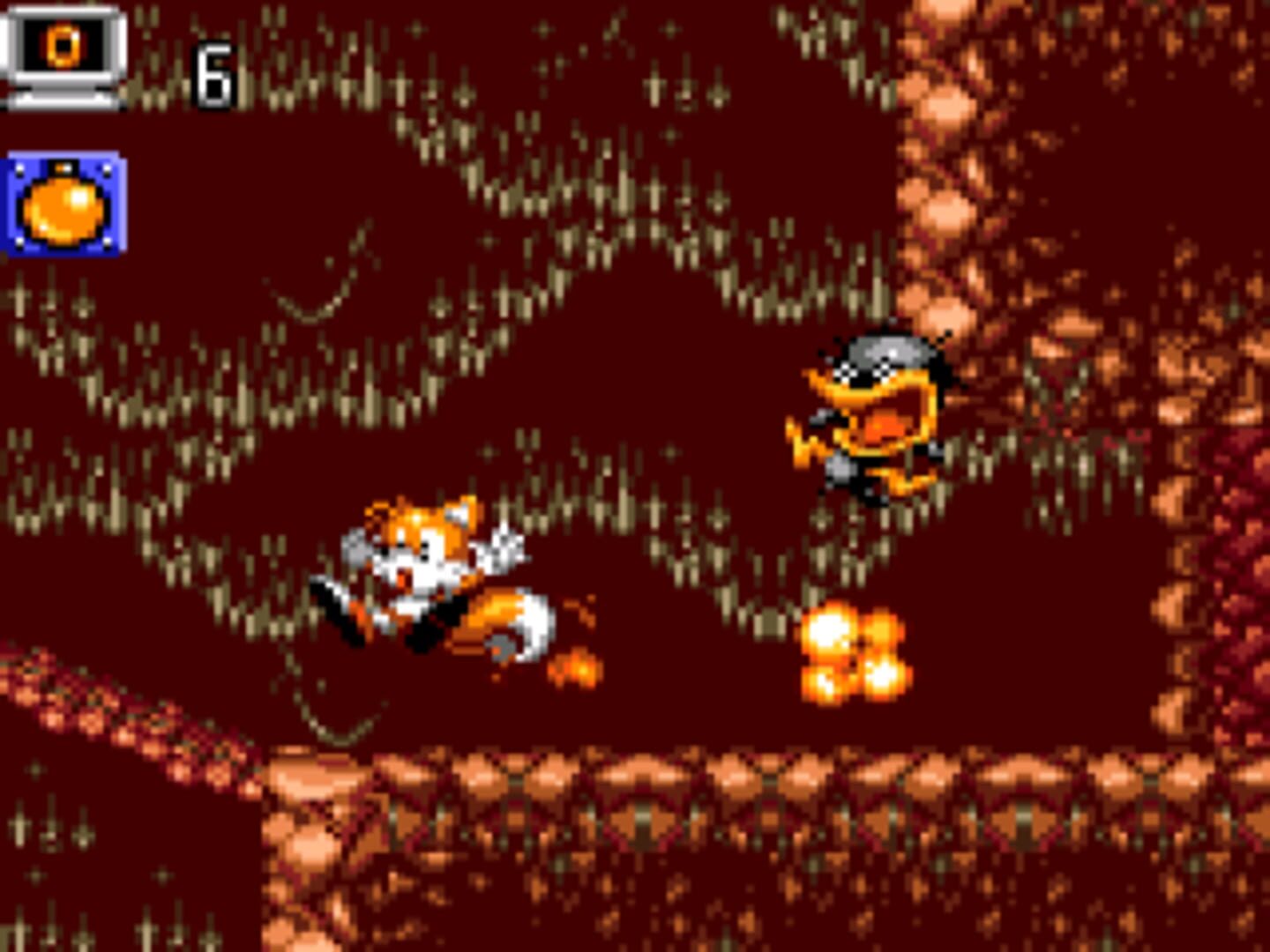
Contrary to the classic speedy gameplay in the Sonic the Hedgehog series, Tails Adventure is a slow-paced platformer with an emphasis on exploration. The player controls Tails in a story set before he befriended Sonic, as he adventures to save Cocoa Island from an invasion of the Kukku Army. He cannot run, but only walk at a steady pace. The player explores twelve non-linear stages, collecting new items and abilities to open up new pathways in previous stages.
A total of 26 items can be collected, including some to defeat enemies and others to aid in exploration. Along with using items, Tails can fly for a short period of time. His fly duration can be extended by locating Chaos Emeralds. Rings are collected as a form of health, and unlike other Sonic games, only a few rings are lost when touching a hazard.
Development
Tails Adventure was developed for the Game Gear by Aspect and published by Sega. Along with Tails' Skypatrol, it is one of two Sonic the Hedgehog games on the Game Gear to star Tails. The soundtrack was composed by Kojiro Mikusa, who also wrote music for Sonic Blast. Tails Adventure was released for the Game Gear on September 22, 1995, in Japan.
It was released in Europe on October 6, 1995, and in North America the same year. The game was re-released through Sonic Adventure DX: Director's Cut in 2003 as an unlockable bonus game, in Sonic Gems Collection in 2005, and Sonic Origins Plus in 2023. It was also re-released for the Nintendo 3DS's Virtual Console in Japan on April 3, 2013, followed by an international release on June 27, 2013.
Reception
Critics felt Tails Adventure was too similar to other platform games, and its slow pace made it weaker than other Sonic offerings. Famitsu felt it lacked any surprising elements and was disappointed it was much more standard than other Sonic games. Mean Machines Sega agreed, calling it "decidedly unoriginal", but believed secret areas and a steep learning curve made it interesting enough to continue playing. Electronic Gaming Monthly compared the game to Super Mario platforming titles and also enjoyed finding hidden areas.
Critics generally liked the graphics and controls, however the graphics did receive some criticism. Mean Machines Sega felt some of the background textures repeated too much, Famitsu criticized the screen's narrow field of vision, and Electronic Gaming Monthly noted some screen blur issues.


