
The articlegameplay, story, development, reception
Gameplay
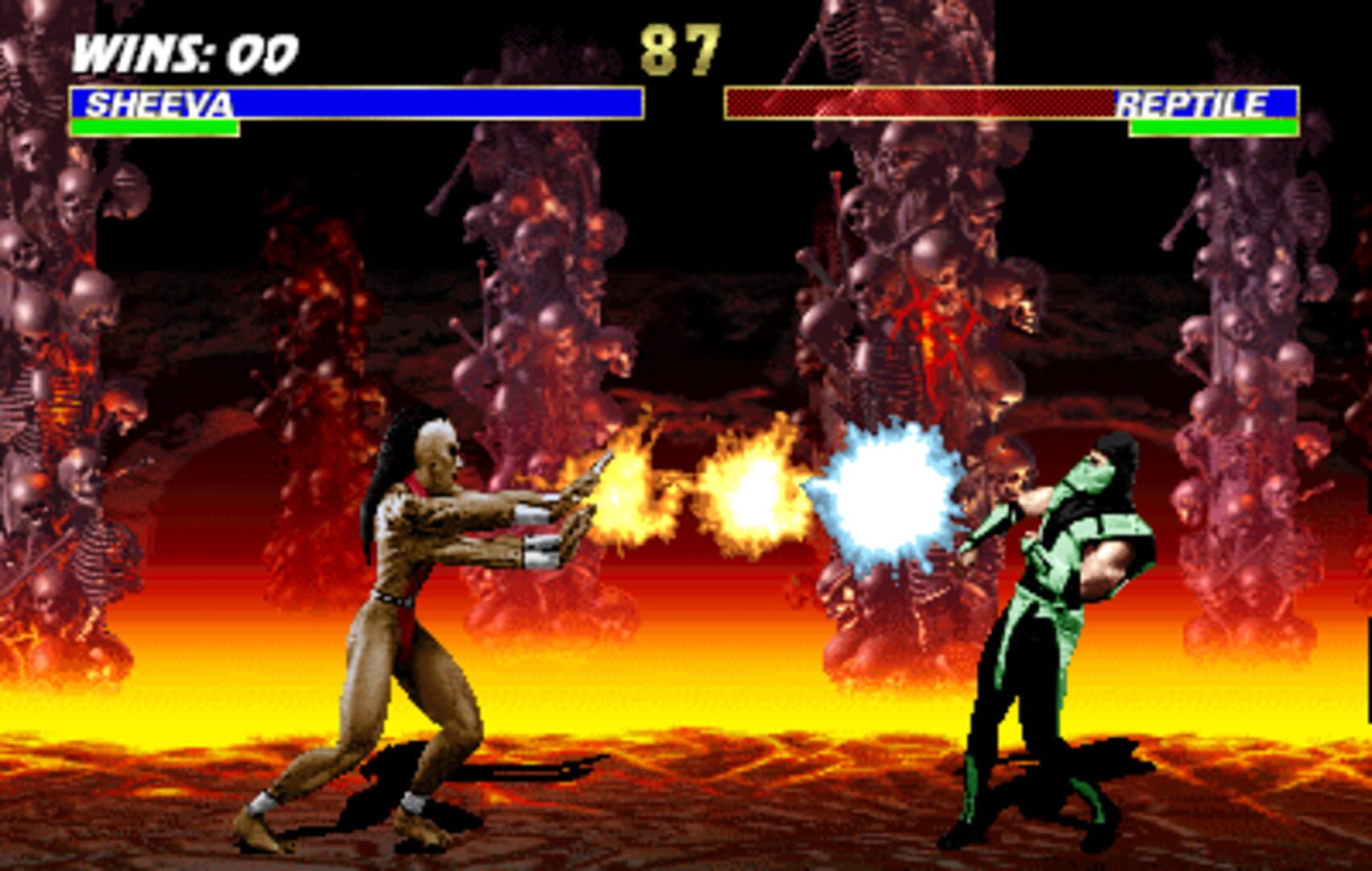
Two new gameplay modes have been introduced since the original Mortal Kombat 3: the 2-on-2 mode which was similar to an Endurance match but with as many as three human players in a given round on both sides (these had not been seen in the series since the first Mortal Kombat), and a new eight-player Tournament mode. An extra Master difficulty is present. Shao Kahn's Lost Treasures – selectable prizes, of which some are extra fights and others lead to various cutscenes or other things – are introduced after either the main game or the eight-player Tournament are completed.
To balance the gameplay, some characters were given new moves and some existing moves were altered. Some characters were given extra combos and some combos were made to cause less damage. Chain combos could be started by using a jump punch (vertical or angled) or a vertical jump kick, which creates more opportunities to use combos. Combos that knock opponents in the air no longer send one's opponent to the level above in multi-layered levels; only regular uppercuts do this.
Reception
Reviewing the arcade version, a Next Generation critic expressed concern that the Mortal Kombat series was headed for the same rut Street Fighter had fallen into, in which unnecessary updates of the same game replaced new installments. He remarked that even the biggest change the game made, the four new characters, was rendered uninteresting by their recycling of the graphic sets of previous characters. However, he added that "To be fair, there is none of the MK quality, detail, or gameplay missing, just about everything you want is there." According to a later IGN retrospective, "the revision helped to win over some frustrated fans, but followers of Johnny Cage, Raiden, and Baraka remained perturbed."
Critical reception of the game has varied depending on the version under review. The initial releases were generally well-received by critics, especially the 32-bit Sega Saturn version. EGM named it their "Game of the Month", commenting that it is a "near-perfect" translation of the arcade version, with the only problem being the long loading times. VideoGames rated this port a review score of 8/10, calling it "simply a great game" and stating that "if there was ever a definitive MK game, this is it."
Legacy
Mortal Kombat Trilogy was released by Midway in 1996 as a follow-up to Ultimate Mortal Kombat 3. Unlike Ultimate Mortal Kombat 3, Mortal Kombat Trilogy was not released in arcades but was instead released for the Sony PlayStation, Nintendo 64, Sega Saturn and PC, as well as for the Game.com and R-Zone. Mortal Kombat Trilogy features the same gameplay and story, but includes all of the characters from the first three games, adding several completely new ones. Also, it introduces features such as the "Aggressor" bar, a meter that fills during the course of the match to make a player character faster and stronger for a short time, and the Brutality finishing moves (which were then incorporated into the Super NES and Genesis versions of Ultimate Mortal Kombat 3).
Ultimate Mortal Kombat 3 was also later remastered to be released as part of the Mortal Kombat Arcade Kollection in 2011.


