Ludography
74/100
Players234 ratings
50/100
Critics1 review
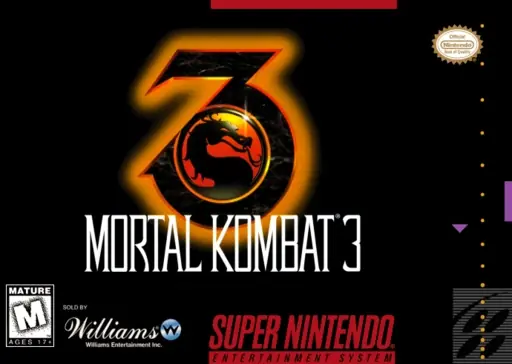
Mortal Kombat 3 cover

1995 · Midway Games · Fighting

Mortal Kombat 3

Mortal Kombat 3 brings new elements to the 2D fighting series: multi-level playfields, "Dial-A-Combo" attacks, a "Run" button to speed up the battles, and "Vs." codes, which unlock new powers and abilities once both players enter a code sequence in pre-match-up screens. Also included are more stage fatalities and finishing moves as each warrior attempts to go one-on-one with the Centaurian enforcer Motaro, and Shao Kahn himself.

Also known as
MK3 · MKIII · モータルコンバット3 · Mortal Kombat 3 Pirate · Ultimate Mortal Kombat 4 · Mortal Kombat 3 Super Game · Mortal Kombat 3 - Extra 60
Released
1995
Platforms
ArcadePlayStationMS-DOSSega GenesisSNESWindows3DOGame BoyGame GearMaster SystemNES
Genres
Fighting
Developers
Midway Games
Publishers
WMS Industries
Series
Mortal Kombat
Modes
MultiplayerSingle-player
Perspective
Side view
Themes
Action
Country
United States
Age ratings
ESRB MPEGI 18
Languages
EnglishJapanese
Copies sold
1.2 million
Entry
#3 in Mortal Kombat
Time to beat
1hmain story3hwith extras6hcompletionist
Composers
Dan Forden

About

Mortal Kombat 3 is a 1995 fighting game developed and published by Midway for arcades. It was later ported to several home systems, including the Sega Genesis, Super Nintendo Entertainment System, Game Boy and PlayStation. It is the third main installment in the Mortal Kombat franchise, and a sequel to 1993's Mortal Kombat II. As in the previous games, it has a cast of characters that players choose from and guide through a series of battles against other opponents. The game avoids the tournament storyline of its predecessors, as various warriors instead fight against the returning Shao Kahn, who has resurrected his bride Sindel and started an invasion of Earthrealm.

Mortal Kombat 3 retains the blood and gory attacks that defined the series, and also introduces new types of Fatality finishing moves, including Animalities. Other features new to the series are combos, predefined sequences used to perform a series of consecutive attacks. The new "Run" button allows players to briefly dash toward the opponent, and the new "Kombat Kodes" system allows players to enter various symbols before two-player matches to unlock certain additional features of the game.

›Story

Fed up with continuous losses in tournament battle, Shao Kahn who had lost to Liu Kang in the Outworld tournament, enacts a 10,000 year-old plan. He would have his Shadow Priests, led by Shang Tsung, revive his former Queen Sindel, who unexpectedly died at a young age. However, she wouldn't be revived in the Outworld. She would be resurrected in the Earth Realm.

This would allow Shao Kahn to cross the boundary lines and reclaim his queen. When Sindel is reincarnated in Earth Realm, Shao Kahn reaches across the dimensions to reclaim her. As a consequence of his action, the Earth Realm becomes a part of the Outworld, killing billions instantly. Only a few are spared, as Rayden protects their souls.

He tells them that Shao Kahn must be stopped, but he cannot interfere; due to his status, he has no power in Outworld, and Earth Realm is partially merged with Outworld. Shao Kahn has unleashed extermination squads to roam throughout the Earth Realm and kill any survivors.

Keywords

  • martial arts
  • dinosaurs
  • bloody
  • gravity
  • death
  • robots
  • hand-to-hand combat
  • skeleton
  • multiple endings
  • special forces
  • dog
  • sequel

Media

The articlegameplay, story, development, reception

Gameplay

Mortal Kombat 3 builds further on the gameplay of the previous game. A "Run" button, accompanied by a corresponding meter, was introduced. This was primarily to address concern from fans who thought that the previous games gave too much of an advantage to the defending player. The Run meter is drained both by running (the character cannot run backward, only forwards) and by performing combos.

"Chain combos", also known as pre-programmed combos (labeled "dial-a-combos") were also introduced. Chain combos are button sequences that cannot be interrupted once one hit connects; some chain combos end with an uppercut or another move that knocks the opponent into the air so that more damage can be dealt via a traditional juggle combo. To please players of various skill levels, a "Choose Your Destiny" screen appears in the single-player mode to allow player-selectable difficulty.

Story

Weary of continuous losses in tournament battle, Shao Kahn, who lost to Liu Kang in the Outworld tournament in the previous game, enacts a 10,000-year-old plan. He would have his Shadow Priests, led by Shang Tsung, revive his former Queen Sindel, who unexpectedly died at a young age. However, she would not be revived in the Outworld, but in Earthrealm. This would allow Shao Kahn to cross the boundary lines and reclaim his queen.

When Sindel is reincarnated in Earthrealm, Shao Kahn reaches across the dimensions to reclaim her and, as a result, Earthrealm gradually becomes a part of Outworld, stripping billions of their souls. Only a few are spared, protected by Raiden. He tells them that Shao Kahn must be stopped, but he cannot interfere; due to his status, he has no power in Outworld, and Earthrealm is partially merged with Outworld. Shao Kahn has unleashed extermination squads to kill any Earthrealm survivors.

Development

The development team considered making Mortal Kombat 3 using 3D graphics, but opted to stick with the sprite graphics of the previous games.

The game has a different tone overall than its predecessors and uses a noticeably more muted color palette. Characters were heavily digitized, as opposed to the hybrid digitized/hand-drawn style of MKII. Many of the game's backgrounds were created using pre-rendered 3D graphics for the first time. Its overall style was also differentiated from the previous Mortal Kombat games; instead of the heavy ancient East Asian influences the first two games had, the imagery of MK3 is more Western and contemporary: the game's stages are set in modern locations such as urban highways, bank buildings, and rooftops; three of the characters are cyborgs; and traditional martial art clothing designs, such as Sub-Zero's garb, have been replaced by modern clothing. This change is also reflected in the soundtrack, in which all Asian motifs have been dropped in favor of electronic music instrumentation.

Reception

In the United States, RePlay reported Mortal Kombat 3 to be the most popular arcade game of May 1995. Mortal Kombat 3 was one of three 1995 recipients of the American Amusement Machine Association's Diamond Awards (which are based strictly on sales achievements), along with Sega's Daytona USA and SNK's Neo Geo MVS. It was the highest-grossing arcade conversion kit of 1995 in the United States.

Williams Entertainment, which published the Super NES and Genesis versions, reported combined sales of 250,000 copies in the first weekend they were available, placing them among the best-selling games of 1995. The Super NES version had sold more than one million copies by November 23, 1995. It went on to be the best-selling home video game of 1995 in the United States. The Mega Drive version became the best-selling Mega Drive game in Brazil. Mortal Kombat 3 was nominated for the Video Software Dealers Association's "Video Game of the Year" for 1995, losing to Donkey Kong Country 2.

Legacy

Ultimate Mortal Kombat 3 was released to arcades in 1995. It is an update of Mortal Kombat 3, featuring altered gameplay, additional characters, and new arenas. Various home versions of the game were released soon afterward, although none of these were completely identical to the arcade version. Several more home versions followed between 2002 and 2010, including Mortal Kombat Advance for the Game Boy Advance and Ultimate Mortal Kombat for the Nintendo DS. The DS version features the "Puzzle Kombat" minigame originally from Mortal Kombat: Deception.

Ultimate Mortal Kombat 3 itself was updated to include content from previous games in the series and serve as the basis for the console-exclusive title Mortal Kombat Trilogy in 1996. It was also remastered to be released as part of the Mortal Kombat Arcade Kollection in 2011.
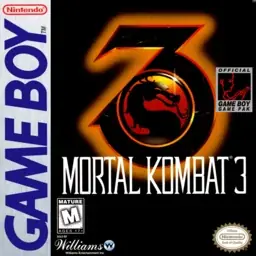
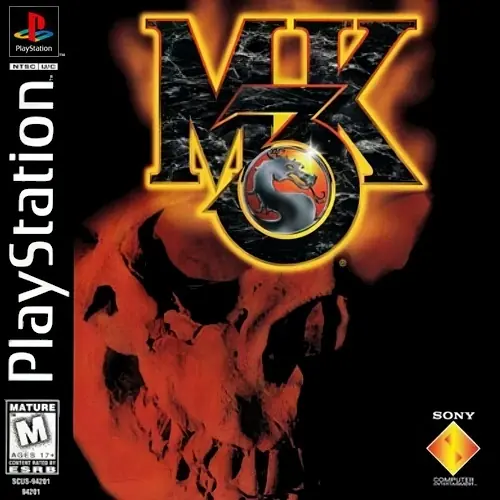
Releases by platformdates and regions as published

Releases by platform
PlatformReleasedRegions
Arcade15 April 1995North America
PlayStation14 June 1995Japan · North America 13 October 1995 · Europe 8 December 1995
MS-DOS1 September 1995Europe · North America 13 October 1995
Sega Genesis13 October 1995North America · Europe 20 October 1995 · Brazil 31 December 1995
SNES13 October 1995North America · Europe 20 October 1995 · Brazil 31 December 1995
Windows1 September 1996North America

Title IDsone per regional release, with its latest update

Title ids and disc serials by release
PlatformTitle IDRegionLatest update
Game BoyDMG-A3MP-EUREurope—
DMG-A3ME-USANorth America—
Game GearT-81368-50Europe—
PlayStationSCES-00060Europe—
SIPS-60006Japan—
SCUS-94201North America—
SLUS-01126North America—
SNESSNSP-A3MP-EUREurope—
SNS-A3ME-USANorth America—
Sega GenesisT-97116North America—

Box artone per regional release we hold art for

Editions and related releases

Included in
Mortal Kombat 1+2+3Midway Arcade Treasures: Extended PlayMortal Kombat: Legacy KollectionMidway Arcade Treasures 2Sega Genesis Classic Game ConsoleMortal Kombat: Legacy Kollection - Deluxe EditionMortal Kombat: Legacy Kollection - Kollector's Edition
Expanded editions
Ultimate Mortal Kombat 3
Followed by
Ultimate Mortal Kombat 3Mortal Kombat 4Ultimate Mortal Kombat
Follows
Q843486Mortal Kombat II: Music from the Arcade Game Soundtrack
Ported as
Mortal Kombat 3
Built on it
Ultimate Mortal Kombat

In the same series

Games like this

Collections16 collections

Platform libraries

Series and characters

Genres

Licensing

Reception and records

Description adapted from its source, CC BY-SA 4.0.