The articlegameplay, story, development, reception
Gameplay
Mortal Kombat Trilogy introduces the "Aggressor" bar, which fills as the combatants fight (twice as much if the opponent is blocking). Once the bar is filled, it grants the character fast movement and greater attack damage for a short period of time.
Many characters gained additional special moves. Some were simple edits of existing moves (such as Stryker throwing two grenades instead of one), while others were unused animations never implemented in their intended previous games. These special moves included MK1 Kano's Knife Spin move, MKII Kung Lao's Air Torpedo, Goro's Spinning Punch move, Raiden's Lightning that shoots from behind the opponent, and Baraka's Blade Spin move. Additionally, Shao Kahn gained a throw and grab-and-punch move, and Motaro gained a proper throw move.
Sub-Zero's famous "Spine Rip" Fatality reappears in the game but is completely censored, as the screen blacks out with only the "Fatality" text visible. This was due to avoid having to re-animate the fatality for this game.
Trilogy introduces the "Brutality" finishing move, which consists of repeatedly attacking the opponent until they explode. It was incorporated into the Mega Drive/Genesis and SNES ports of Ultimate Mortal Kombat 3, which were released the same month as Trilogy. All of the arenas that featured a Stage Fatality are featured in this game, except for the one in the Pit II, for similar reasons to the "Spine Rip" Fatality.
All of the battle arenas that were featured in MKII, MK3, and UMK3 are available in MKT, but only four backgrounds from the original Mortal Kombat are featured (Courtyard, Goro's Lair, the Pit, and the Pit Bottom). The PC, PlayStation, and Sega Saturn versions lack the Hidden Portal and Noob's Dorfen stages from MK3, while the Nintendo 64 version lacks Kahn's Arena and the Bank from MKII and MK3, respectively (though they were present in the beta version of the game).
Development
Actors Ho Sung Pak (Liu Kang), Philip Ahn (Shang Tsung), Elizabeth Malecki (Sonya Blade), Katalin Zamiar (Kitana/Mileena/Jade) and Daniel Pesina (Johnny Cage and Scorpion/Sub-Zero/Reptile/Smoke) all left Midway prior to the production of the game due to royalty disputes, and so their respective roles were played by new actors. Initially publisher Williams Entertainment stated that Johnny Cage would not be included in the game at all due to the dispute with Pesina. Carlos Pesina's original sprites were used for Raiden's gameplay, but Sal Divita's image was used for his versus screen picture.
Most of the background music tracks from MKII and MK3 remained intact, especially for the CD-ROM versions of the game. In all versions of the game, many of the tracks do not match their respective arenas when compared to their original arcade counterparts. In all versions of MKT, none of the music from the original Mortal Kombat game is used. All of the CD-ROM games read the background music directly from the CD, providing high-quality CD sound, but all of the music loops are used when "Finish Him/Her" appears.
All of the music taken from MK3 on the CD-ROM MKT games is noticeably slowed down in both speed and pitch. When these particular songs were converted to MKT' Red Book CD-DA quality, they were downsampled without resampling them to maintain the original tempo and pitch in the PC, PlayStation, and Saturn versions.
Reception
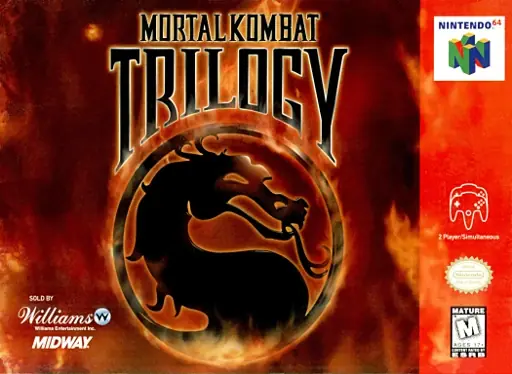
The game's critical reception has varied considerably, depending on the platform and publication. 8 out of 5, and regarded it as the best Mortal Kombat game. French magazine Super Power gave the N64 game 91%, favoring it over the PlayStation version. The four reviewers of Electronic Gaming Monthly all gave the Nintendo 64 version their recommendation, citing the impressive amount of content and absence of load times, though Dan Hsu and Crispin Boyer found the graphics disappointing given the capabilities of the console.
Both Boyer and Shawn Smith said the game had converted them to the Mortal Kombat fandom. GamePro likewise praised the amount of content, as well as the accurate recreation of the arcade games' graphics, the addition of the Aggressor meter, and the application of new mechanics to characters from older games in the series. They complained that the game suffers from some slowdown and muted music, but concluded it "delivers with all the fighters, secrets, and carnage that made the series the phenomenon it is today."
Jeff Gerstmann of GameSpot contradicted GamePro, saying that the music is normal for a non-CD game and it is the sound effects (which GamePro described as "arcade-perfect") that sound muffled. And while he complimented the Nintendo 64 version's large selection of play modes, he said it is conspicuously missing frames of animation from the arcade games, and that the characters left out of this version are "favorites". Peer Schneider of IGN contended that all of the audio aspects sound muffled. He said the Nintendo 64 version is a faithful conversion of the arcade games, though he compared it unfavorably to the PlayStation version.
However, he held that the arcade games themselves are too aged to merit an appearance on the Nintendo 64, referring to them as five years old (in actuality, Mortal Kombat 3 was barely a year old at the time, and even the oldest in the series was four years old). Mortal Kombat Trilogy was said to be a "particularly horrible game" among the Nintendo 64 library by Forbes, but was honored in Nintendo Power Awards '96, coming second in the category "Best Tournament Fighting Game".
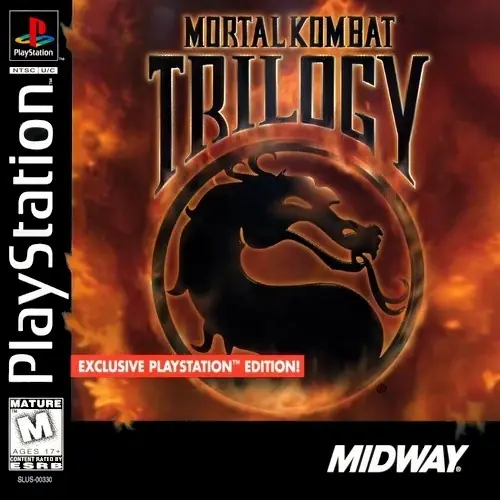
Reviewing the PlayStation version, GamePro criticized the overly difficult opponent AI and the unbalanced nature of the playable boss characters, and said the music tracks "sound like a 45 record played at 33 RPM." They nonetheless concluded it to be "a must for any fighting gamer's library", due to the responsive controls and large amount of content. Though Electronic Gaming Monthly never reviewed the PlayStation version of Mortal Kombat Trilogy, they ran a four-page feature comparing it to the Nintendo 64 version. Shawn Smith picked the Nintendo 64 version as the one to buy, saying that the major bugs in the PlayStation version outweigh the Nintendo 64 version's various shortcomings.
99 for the Nintendo 64 version). They later named both versions runner-up for Fighting Game of the Year, behind Tekken 2.
The Saturn version arrived nearly a year (over a year in some countries) after the PlayStation and Nintendo 64 versions and received comparatively little attention. Sega Saturn Magazine said the long wait for the conversion was baffling (since the game's 2D visuals fall within the Saturn's specialty and no new content had been created for the Saturn version) and damaging (since superior 2D Saturn fighters had since come out and home versions of Mortal Kombat 4 were on the horizon, making Mortal Kombat Trilogy both graphically and stylistically outdated). Sega Saturn Magazine, Game Informer, and GamePro all concluded it to be a must-have for Mortal Kombat fans due to its comprehensive content and features, but advised non-fans to look to other fighting games on the Saturn, and described it as virtually identical to the PlayStation version. GamePro printed a warning to "think twice before purchasing this version of MK Trilogy" in a reader response section after they learned that Midway had deliberately omitted the animations for some fatalities in order to ship the game on time.
Released at a time when the Nintendo 64's popularity was burgeoning and there were few competing games for the system, the Nintendo 64 version of Mortal Kombat Trilogy saw impressive sales figures. According to a later IGN retrospective, Mortal Kombat Trilogy "offered something no fan could ignore: It brought every character from the series into the fold, along with most of the levels, making for one massive game that had enough to please everyone. Sure, some of the balance went out the window with the massive cast, but it was a small price to pay to make the Mortal Kombat family whole again, and it gave fans the closure they needed for Midway to move on to Mortal Kombat 4."