

- 87/100
- Players3,236 ratings
- 93/100
- Critics8 reviews
More scores
- Metacritic44 critic reviews
- 96/100
- Metacritic usersuser score
- 87/100
- GameFAQsJust Right
- 4.13/5
- Player reviews
- 93% positive25,264 reviews
- Steam Deck
- Playable
- Runs on
- Windows
- Price
- US$4.99
Where to get it

2007 · Irrational Games · Adventure · First-person shooter
BioShock
BioShock is a horror-themed first-person shooter set in a steampunk underwater dystopia. The player is urged to turn everything into a weapon: biologically modifying their own body with Plasmids, hacking devices and systems, upgrading their weapons, crafting new ammo variants, and experimenting with different battle techniques are all possible. The game is described by the developers as a spiritual successor to their previous PC title System Shock 2. BioShock received high praise in critical reviews for its atmospheric audio and visual quality, absorbing and original plot and its unique gaming experience.
- Released
- 21 August 2007
- Platforms
- Nintendo SwitchPlayStation 3WindowsXbox 360macOS
- Genres
- AdventureFirst-person shooterHistoricalHorrorPuzzleRole-playingScienceShooterVideo game with LGBT character
- Developers
- Irrational Games
- Publishers
- 2K
- Series
- BioShock
- Modes
- Single-player
- Perspective
- First person
- Themes
- ActionScience fictionHorrorStealthOpen world
- Engine
- Unreal Engine 2.5
- Country
- United StatesAustralia
- Age ratings
- ACB MA 15+GRAC 19+ESRB MPEGI 18CERO DUSK 18CLASS_IND 18
- Languages
- English, French, German, Italian, Spanish (Mexico), Spanish (Spain)
- Copies sold
- 4 million as of 2010-03-03
- Time to beat
- 8hmain story16hwith extras26hcompletionist
- Directors
- Ken Levine
- Composers
- Garry Schyman
About
BioShock is a 2007 first-person shooter video game developed by 2K Boston (later Irrational Games) and 2K Australia, and published by 2K. The first game in the BioShock series, it was released for Microsoft Windows and Xbox 360 platforms in August 2007; a PlayStation 3 port by Irrational, 2K Marin, 2K Australia and Digital Extremes was released in October 2008. The game follows player character Jack, who discovers the underwater city of Rapture, built by business magnate Andrew Ryan to be an isolated utopia. The discovery of ADAM, a genetic material which grants superhuman powers, initiated the city's turbulent decline.
Jack attempts to escape Rapture, fighting its mutated and mechanical denizens, while engaging with the few sane survivors left and learning of the city's past. The player can defeat foes in several ways by using weapons, utilizing plasmids that give unique powers, and by turning Rapture's defenses against them through hacking.
›Story
In the year 1960, a plane crashes in the middle of the Atlantic Ocean with a man named Jack as the only survivor. He has the apparent luck of resurfacing in front of what looks like a door to an underwater complex. Without hesitating, Jack enters the door and is greeted by slogans that praise the city of Rapture, a paradise of free will built in the 1940s by a business magnate named Andrew Ryan. However, even before he assimilates all this new information, the descent to this supposed paradise ends and he can only see ruins and chaos. Learning about the destiny of Rapture will be now Jack's main motivation while he tries to survive the horrors that free can create.
Players say
Media
The articlegameplay, story, development, reception
Gameplay
BioShock is a first-person shooter with role-playing customization and stealth elements, and is similar to System Shock 2. The player takes the role of silent protagonist Jack as he is guided through Rapture towards various objectives. The player battles enemies using a combination of traditional weaponry and magic-like plasmids. Aside from the wrench, a melee weapon, players can upgrade their weapons through upgrade stations scattered across the environment; these upgrades modify weapons with added range, lessened recoil, or similar improvements.
Weapons can also be equipped with different ammo types to increase effectiveness against varied targets. Plasmids confer superpowers such as casting fire or electric attacks, and in some cases can be used to access new areas—for example, melting ice blocking a path, or tripping the electric lock to open a door. Using plasmids requires EVE—the equivalent of mana—which can be replenished with EVE hypos or certain consumable food and drink. The player has a health meter that decreases when they take damage.
Story
BioShock takes place in Rapture, an underwater city built in the 1940s by business magnate Andrew Ryan, who wanted to create a utopia for society's elite to flourish outside of government control. To protect and isolate Rapture, Ryan bans contact with the surface world. As Rapture flourished, wealth disparities grew, and con man Frank Fontaine used his influence over the disenfranchised working class to establish illegal enterprises and obtain power—enough to rival Ryan. With doctors Brigid Tenenbaum and Yi Suchong, Fontaine created his own company dedicated to researching plasmids and gene tonics.
The scientists discovered that sea slugs could produce a substance called ADAM that grants superhuman powers by rewriting a person's DNA. As ADAM became addictive and demand skyrocketed, Fontaine secretly mass-produced ADAM through slugs implanted in the stomachs of orphaned girls, nicknamed "Little Sisters". Fontaine was killed in a shootout with police, and Ryan took the opportunity to seize his assets, including control of the Little Sisters.
Development
Ken Levine and other members of Looking Glass Studios founded Irrational Games in 1997. Their first game was System Shock 2, a sequel to Looking Glass's System Shock, and was a critical, but not commercial, success. Levine had attempted to pitch a sequel to System Shock 2 to Electronic Arts, but the publisher rejected the idea based on System Shock 2's disappointing sales. Irrational developed other games, including Freedom Force, Tribes: Vengeance, the canceled title Deep Cover, and The Lost which was never released due to legal complications.
The wanted to return to a more free-form game with strong narrative in the same style as System Shock 2, feeling there was more to do with some of the concept of that game. At the same time, they were mindful of making a successor that was more accessible to a wider variety of players. "We recognized that there were things in System Shock 2 that were holding it back, that were excessively complicated, that were opaque or hard for people to understand or that they simply didn't like," Irrational co-founder Jonathan Chey recalled.
Reception
BioShock received highly positive reviews from critics, with an average review score of 96/100 for Xbox 360 and Microsoft Windows, and 94/100 for PlayStation 3 on reviews aggregator Metacritic. Mainstream press reviews praised the immersive qualities of the game and its political dimension. The Boston Globe described it as "a beautiful, brutal, and disquieting computer game ... one of the best in years", and compared the game to Whittaker Chambers' 1957 riposte to Atlas Shrugged, "Big Sister Is Watching You".
Wired also mentioned the Ayn Rand connection (a partial anagram of Andrew Ryan) in a report on the game which featured a brief interview with Levine. The Chicago Sun-Times review said "I never once thought anyone would be able to create an engaging and entertaining video game around the fiction and philosophy of Ayn Rand, but that is essentially what 2K Games has done ... the rare, mature video game that succeeds in making you think while you play".
Legacy
BioShock has received praise for its artistic style and compelling storytelling. In their book, Digital Culture: Understanding New Media, Glen Creeber and Royston Martin perform a case study of BioShock as a critical analysis of video games as an artistic medium. They praised the game for its visuals, sound, and ability to engage the player into the story. They viewed BioShock as a sign of the "coming of age" of video games as an artistic medium.
John Lanchester of the London Review of Books recognized BioShock as one of the first video games to break into coverage of mainstream media to be covered as a work of art arising from its narrative aspects, whereas before video games had failed to enter into the "cultural discourse", or otherwise covered due to moral controversies they created. Peter Suderman for Vox in 2016 wrote that BioShock was the first game that demonstrated that video games could be a work of art, particularly highlighting that the game plays on the theme of giving the illusion of individual control. In February 2011, the Smithsonian Institution announced it would hold an exhibit dedicated to the art of video games. Several games were chosen by the Smithsonian's curators; when the public voted for additional games they felt deserved to be included in the exhibition, BioShock was among the winners.
Awards
Speedruns
- Any%Reev_022m 25s
- GlitchlessPrjsoneR1h 21m 56s
- All CollectiblesPrjsoneR1h 12m 54s
- No Major SkipsPrjsoneR54m 55s
Releases by platformdates and regions as published
Editions and related releases
- Included in
- BioShock: Ultimate Rapture EditionBioshock & Borderlands: The Shooter Collection
- Followed by
- BioShock 2
- Ported as
- BioShock
- Remastered as
- BioShock Remastered
- Built on it
- BioShockBioShock Remastered
- Editions
- BioShock: Limited Edition
In the same series
 84
BioShock 2
2010 · Nintendo Switch, PlayStation 3 +3
2K Marin
 80
BioShock 2: Minerva's Den
2013 · DLC · PlayStation 3, Windows +2
2K Marin
 89
BioShock Infinite
2013 · Linux, Nintendo Switch +6
Irrational Games
 80
BioShock Infinite: Burial at Sea
2013 · Expansion · Linux, Nintendo Switch +6
Irrational Games
 85
BioShock: The Collection
2016 · Bundle · Nintendo Switch, PlayStation 4 +2
Blind Squirrel Entertainment
Games like this
 78
Singularity
2010 · Linux, PlayStation 3 +2
First-person shooter · Horror
 87
Dead Space
2008 · PlayStation 3, Windows +1
Puzzle · Science
 86
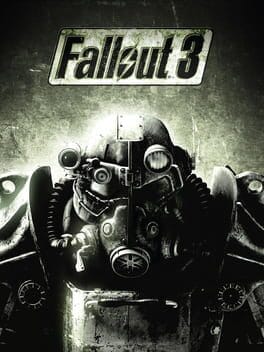
Fallout 3
2008 · PlayStation 3, Windows +1
First-person shooter · Role-playing
 85
Dishonored
2012 · PlayStation 3, Windows +1
Adventure · First-person shooter
 85
Fallout: New Vegas
2010 · PlayStation 3, Windows +1
First-person shooter · Role-playing
 79
Wolfenstein: The New Order
2014 · PlayStation 3, PlayStation 4 +3
Adventure · First-person shooter
 89
Fallout 2
1998 · Windows, macOS
Puzzle · Role-playing
 88
Deus Ex: Human Revolution
2011 · PlayStation 3, Wii U +3
First-person shooter · Puzzle
Collections17 collections
Platform libraries
- Windows Games on DemandReleased
- Mac gamesB
- Xbox 360 games (A–L)
- Backward-compatible games for Xbox One and Series X/SList of compatible titles from Xbox 360
- PlayStation 3 games (A–C)
- Nintendo Switch games (B)List
Publishers
Years
- Games released in 2014List › July–September
- Games released in 2015List › July–September
Genres
- First-person shootersList
- Historical gamesGames set in the Contemporary Era (1945–2025)
- Horror gamesList
Reception and records
Themes
- Game remakes and remastersList
- Games with LGBTQ charactersGames › 2000s
Description adapted from its source, CC BY-SA 4.0.