The articlegameplay, story, development, reception
Gameplay
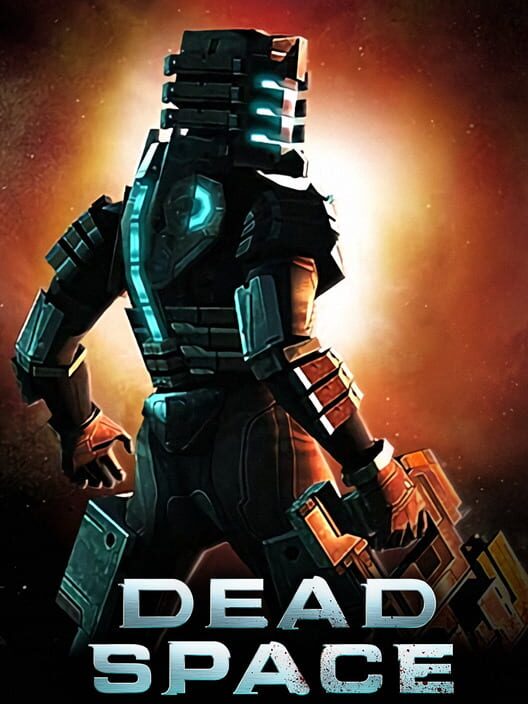
Dead Space is a science fiction survival horror video game. Players take on the role of Isaac Clarke, controlling him from a third-person view. Players navigate level-based sections of the spaceship Ishimura, completing narrative-driven missions, solving physics puzzles within the environment, and fighting monsters called Necromorphs. In the vacuum Isaac has a limited air supply, which can be replenished by finding air tanks within the environment.
Some areas are subject to zero-G, with both Isaac and specific enemy types able to jump between surfaces; these areas have dedicated puzzles. During exploration of the Ishimura, Isaac finds ammunition, health pickups, and Nodes that are used to both unlock special doors and upgrade weapons and Isaac's suit. At certain points in the ship, Isaac can access a store to buy supplies and ammunition. Isaac can stomp to break supply crates and attack enemies, and punch to kill smaller enemies and repel larger ones.
Two more abilities unlocked during the game are Kinesis, which can move or pull objects in the environment, and Stasis, which slows movement for a limited time. All gameplay displays are diegetic, appearing in-world as holographic projections. Isaac's health and energy levels are displayed on the back of his suit, and ammunition count appears when weapons are raised. All information displays—control prompts, pick-ups, video calls, the game map, inventory, store fronts—appear as holographic displays.
While the player is browsing menus, time in the game does not pause.
While exploring, Isaac must fight Necromorphs, which appear from vents, or awaken from corpses scattered throughout the ship. The various types of Necromorphs have different abilities and require altered tactics to defeat. Depending on how they are wounded, Necromorphs can adopt new stances and tactics, such as sprouting new limbs or giving birth to new enemies. Isaac can access multiple weapons to combat the Necromorphs, which can only be killed by severing their limbs.
To do this, Isaac uses weapons designed for cutting. The initial weapon is picked up during the first level, while others can be crafted using blueprints discovered in different levels. Workbenches found in levels can be used by Isaac to increase the power or other attributes of his weapons and suit. Beating the game unlocks New Game+, which gives Isaac access to a new outfit, extra credits and equipment, as well as new video and audio logs.
It also unlocks a higher difficulty setting.
Story
Dead Space is set in the year 2508, a time when humanity has spread throughout the universe. Following near-extinction of humans on Earth due to resource shortages, ships dubbed "Planetcrackers" are being used to harvest resources from barren planets. The oldest Planetcracker is the USG Ishimura, which is performing an illegal mining operation on the planet Aegis VII. The backstory reveals that Aegis VII was the home of a "Red Marker", a manmade copy of the original alien Marker monolith discovered on Earth.
Attempts to weaponise the Marker and its copies led to the creation of a virus-like organism that infected corpses and transformed them into undead creatures called Necromorphs. Two key factions in Dead Space are the Earth Government ("EarthGov"), which created and then hid the Red Markers, and "Unitology", a religious movement that worships the Markers. Unitology was founded in the name of original researcher Michael Altman.
In the events leading up to Dead Space, the colony on Aegis VII discovers the Red Marker hidden there. Following its discovery and the Ishimura's arrival, first the colonists, and then the ship's crew, begin suffering from hallucinations and eventually severe mental illness, climaxing in the emergence of the Necromorphs. By the time the maintenance ship Kellion arrives, the entire Aegis VII colony, and all but a few of the Ishimura crew, have been killed or turned into Necromorphs.
The game's protagonist is Isaac Clarke, an engineer who travels on the Kellion to find out what happened to his girlfriend Nicole Brennan, the Ishimura's senior medical officer. Aboard the Kellion with Isaac are chief security officer Zach Hammond and computer technician Kendra Daniels. Unbeknownst to the Kellion crew, Kendra is an Earth government agent sent to control the situation. Other characters encountered by Isaac on the Ishimura are Challus Mercer, an insane scientist who believes the necromorphs are humanity's ascended form; Dr. Terrence Kyne, a survivor who wants to return the Marker to Aegis VII; and Nicole, who mysteriously communicates with and appears to Isaac at various points through the ship.
Isaac arrives at Aegis VII on the Kellion with Kendra and Hammond. During the journey, Isaac has been repeatedly watching a video message from Nicole. A docking malfunction crashes the Kellion into the Ishimura's landing bay, and the ship's quarantine is broken. Necromorphs kill all the Kellion crew but Isaac, Kendra, and Hammond.
Isaac sets off to explore the Ishimura, restoring systems and finding parts with which to repair the ship, so that they may escape. They almost succeed, but the Kellion is destroyed in a further malfunction. During these events, all three survivors begin experiencing escalating symptoms of psychosis and delirium, ranging from hallucinations to paranoia.
During his exploration, Isaac learns through audio and video logs about the events that transpired prior to their arrival: The Ishimura's illegal mining operation on Aegis VII, which was designated off-limits by the Earth Government, was meant to find the Red Marker for the Church of Unitology. The Aegis VII colony was almost wiped out by mass psychosis triggered by the Marker, causing killings and suicides. The Marker was brought aboard the Ishimura, along with survivors and bodies from the colony. A combination of the Marker's influence, factional fighting and the emerging Necromorph invasion resulted in the deaths of nearly everyone aboard.
Isaac finds the two remaining survivors of the Ishimura crew: science officer Dr. Terrence Kyne, who has abandoned his belief in Unitology, and his colleague Dr. Challus Mercer, who has gone insane and worships the Necromorphs.
Despite Isaac's efforts, Hammond is killed by a Necromorph, and Mercer allows himself to be transformed by them. Another ship, the Valor, arrives and is infected through an Ishimura escape pod containing a Necromorph; records show that the Valor was dispatched to remove all traces of the Ishimura's presence. Kendra kills Kyne before revealing her Earth Government allegiance, as the deranged Kyne threatened to return the Marker to the Necromorphs' controlling "Hive Mind" on the planet. The Marker was left on Aegis VII as part of an experiment, and Earth wants it retrieved. Reunited with Nicole, Isaac sabotages Kendra's attempt to escape the Ishimura, returns the Marker to Aegis VII, neutralising the Necromorphs and initiating Aegis VII's collapse.
Kendra retrieves the Marker and reveals to Isaac that his encounters with Nicole were hallucinations created by the Marker to return it to the Hive Mind. Nicole's message had ended with her committing suicide to avoid becoming a Necromorph. Kendra is killed by the awoken Hive Mind before she can escape with the Marker. After killing the Hive Mind, Isaac leaves on Kendra's shuttle as both Aegis VII and the Marker are destroyed. In the shuttle, a distraught Isaac mourns Nicole and is attacked by a violent hallucination of her.
Development
Dead Space was the creation of Glen Schofield, at the time working at EA Redwood Shores. Schofield wanted to create what he felt would be the most frightening horror game possible. His concept drew influence from Resident Evil 4 (2005), and the Silent Hill series. EA Redwood Shores had established itself as a studio for licensed game properties, and the team saw an opportunity to branch out into original properties, establishing themselves as "a proper game studio", according to co-producer Steve Papoutsis.
During this early stage, the game was known as Rancid Moon. Dead Space was described as a project that multiple staff at Redwood Shores wanted to work on for many years. Co-director Michael Condrey described it in 2014 as a grassroots-style project where the team were eager to prove themselves, but not expecting the game to become anything large-scale. When they pitched the game to parent company Electronic Arts in early 2006, they were given three months to create a prototype.
In order to get a playable concept ready within that time, the prototype was developed on the original Xbox hardware. The team decided that it would be better to get something playable, before planning how to make the game work on next-generation hardware. Their twin approaches of early demos and aggressive internal promotion ran counter to Electronic Arts practises for new games at the time. Electronic Arts eventually approved the game after seeing a vertical slice equivalent to one level, by which time all the basic gameplay elements had been settled upon.
According to co-producer Chuck Beaver, this pre-greenlight work lasted 18 months. After approval, and using their experience creating the vertical slice, the team built eleven more levels in ten months. The team reused the game engine they had designed for The Godfather, which was chosen because it had been tailored to their development style, supported the necessary environmental effects, and implemented the Havok physics engine.
Schofield wanted to create a game that ran counter to Electronic Art's usual output. To help guide the team, Schofield often described Dead Space as "Resident Evil in space". There are different accounts of the game's relationship with the System Shock series. Condrey said that Dead Space was influenced only by System Shock and System Shock 2.
Co-designer Ben Wanat stated that the team were originally planning a third entry in the System Shock series, and played through the originals for reference, but when Resident Evil 4 was released, they decided to make their own intellectual property based around its gameplay. While greatly influenced by Resident Evil 4, Schofield wanted to make the game more active, as the necessity to stop and shoot in Resident Evil 4 often broke his immersion. The gameplay balance was aimed somewhere between the faster pace of third-person shooters and the slower pace of horror games. Resource management underwent constant tuning and balancing to make the game tense, but not unfair or frustrating.
Immersion was a core element of the game, with HUD elements being in-universe, and story sequences like cutscenes and audio or video logs playing in real-time. In addition, the standard HUD elements were incorporated into the environment with suitable contextual or overt in-game explanations. In the team's opinion, the setting was better realised and conveyed as a side effect of this approach. A quick turn option was implemented and removed several times during production; it was finally removed because mapping the feature to the last available controller buttons caused test players to turn, accidentally, during dangerous situations. The Windows version of the control scheme went through several different configurations, with the team wanting the best possible configuration for mouse and keyboard.
One of the founding gameplay principles was "strategic dismemberment", the focus on severing limbs to kill enemies. This distinguished Dead Space from the majority of shooters, which instead placed focus on headshots, or allowed volleys of weapons fire against enemies. Weapons accuracy and enemy behaviour were adjusted around this concept. For example, enemies became enraged by traditional headshots and charged at the player, rather than being killed instantly. A two-person co-op multiplayer option was prototyped over a three-month period, but was eventually cut so that the team could focus on making a polished single-player experience.
A procedural element was created for enemy placement, such that enemies would appear at random points within a room; thus, players could not memorise and counterattack against patterns. There was a mechanism for controlling where enemies would spawn from places like vents, depending on the player's position. One gameplay sequence, where Isaac is ambushed and dragged down a hallway by a large tentacle, stalled development for a month. The team initially planned it as an instant death, then changed the attack to be an interactive one that Isaac had to escape.
A dedicated set of mechanics and animations had to be created for the sequence, and Schofield admitted that the way and order he assigned tasks stopped the sequence working properly. To make the sequence work, the team shifted to a "layered" production structure which focused on finishing one section at a time, so that they could pinpoint problems with ease. The team had to cut two other unspecified pieces to allow the tentacle sequence to work. Ultimately this problem helped build up team confidence, allowing them to tackle other problems in the game and add more content.
The character animation was designed to be realistic, with extensive transitional animations to smooth out shifts between different stances for both the player, other characters and enemies. The zero-G sections were in place alongside the setting, and the team performed extensive research on real space exploration and survival to get the atmosphere and movement rig
Reception
Dead Space received "generally favorable" reviews from critics, according to review aggregator website Metacritic.
Upon release, Dead Space earned universal acclaim from many journalists. com praised its innovations in third-person gameplay, though faulted several elements that felt like padding. Computer and Video Games's Matthew Pellett was similarly positive about the gameplay and lore, though wishing for more zero-G sections and again faulting its length. Dan Whitehead, writing for Eurogamer, enjoyed the experience despite some frustrating design elements and other parts that clashed with the horror aesthetic.
Andrew Reiner of Game Informer enjoyed his time with the game, praising its committent to horror elements and gameplay elements. In a second opinion, Joe Juba called it "the premiere accomplishment in survival horror since Resident Evil 4". GamePro gave the game a perfect score, praising almost every aspect of the experience except for a lack of additional gameplay modes.
Lark Anderson of GameSpot praised the enemy design and behavior, praising it as being able to stand out within the survival horror genre. GameTrailers was positive about the game's use of both many horror tropes and its references to other horror and science fiction properties, saying players would be compelled to push on despite the disturbing atmosphere. IGN's Jeff Haynes faulted some overpowered mechanics and frustrating New Game+ elements, but generally praised it as an enjoyable new title in the genre. Jeremy Jastrzab of PALGN summed the game up as "easily the most atmospherically intense, genuinely scary and well-built survival horror experience of this current generation".
The storyline saw a divided reaction; many praised its atmosphere and presentation, but other critics found it derivative or poorly written. Where mentioned, the graphics and environmental design were praised. The voice acting and sound design were also well received, with the latter being praised for reinforcing the horror atmosphere. The twist on combat mechanics and enemy behavior design met with much praise, but repetitive level and mission structure were often faulted. The complete lack of a HUD was also positively noted.
Several retrospective journalistic and website articles have ranked Dead Space as one of the greatest games of all time, pointing out its innovations in the survival horror genre. A 2011 GamePro article noted that the game promoted Electronic Arts as a potential home for original IPs, and generally found a balance between action and horror despite some contemporary reviews having mixed reactions. In an article on the series from 2018, Game Informer said the title stood out for its unique gameplay gimmicks and atmosphere compared to other video games of the time. Magazine Play, in a 2015 feature on the game's production, said that Dead Space distinguished itself by incorporating more action elements into established genre elements, and positively compared its atmosphere to BioShock from 2007 and Metro: Last Light from 2013. In a 2014 article concerning the series' later developments, Kotaku cited it as "one of the best horror games of the seventh generation of consoles".
At release, Dead Space reached tenth place in North American game sales, compiled in November by the NPD Group. Recording sales of 193,000 units, it was the only new property to enter the top ten. It was the only Electronic Arts property within that group. In early analysis, low sales of the title were attributed to strong market competition at the time, though sales improved over time due to positive critical reception.
By December, the game had sold 421,000 units across all platforms. The game, along with Mirror's Edge, was considered a commercial disappointment following its extensive marketing. Electronic Arts CEO John Riccitiello said that the company would have to lower its expected income for the fiscal year due to multiple commercial disappointments including Dead Space. In February 2009, Electronic Arts CFO Eric Brown confirmed that all versions of Dead Space had sold one million copies worldwide.
Legacy
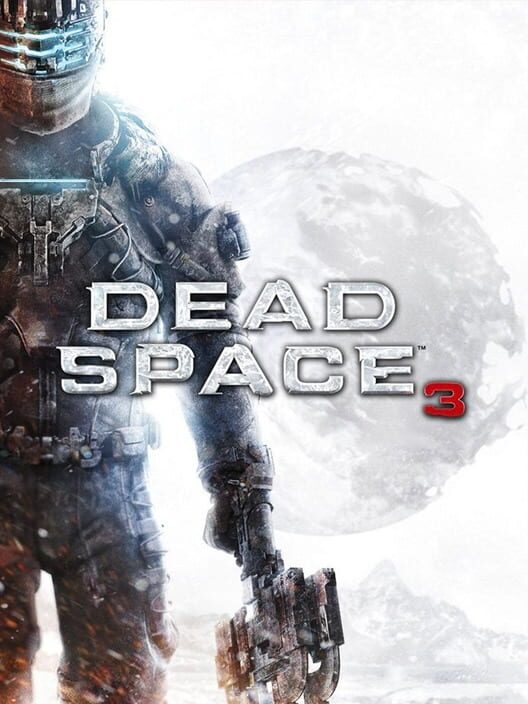
Following the success of Dead Space, EA Redwood Shores was restructured as a "genre studio" called Visceral Games, going on to develop several titles alongside their work on the Dead Space franchise, which spawned both further additional media and spin-off titles on several platforms. A direct sequel, Dead Space 2, was released in 2011, and a third title, Dead Space 3, launched in March 2013. The third game was met with disappointing sales, and a prospective sequel was cancelled before Visceral Games was closed down in 2017.
EA announced a remake of Dead Space in July 2021, to be developed by EA's Motive Studios. The remake was released in January 2023 for PC, PlayStation 5, and Xbox Series X/S consoles. Among lead staff include senior producer Philippe Ducharme, creative director Roman Campos-Oriola, and art director Mike Yazijian, all whom had worked on titles within the Dead Space series. There were no plans to change the story or the characters, though the team did consider the other Dead Space games and included references to these prior works as to incorporate the first game better into the series canon.
They also incorporated some of the cut content that they found in reviewing the design files for the original game. The team said they would remove some gameplay elements that "didn't work", based on consultation with players and fans of the Dead Space series. They also would focus on improving the accessibility of the game, using improvements in accessibility features created since the original game's release. The remake is built in the Frostbite Engine, rebuilding all the systems from scratch for it and introducing new features such as volumetric and dynamic lighting.
The game also takes advantage of the newer consoles' solid-state drive systems to create a seamless experience between levels without any loading screens. There weren't any plans to introduce microtransactions into the game, a similar move following the release of Star Wars Jedi: Fallen Order.
A PlayStation 1-style fan remake, titled Dead Space Demake, was released as a playable demo in April 2023.