The articlegameplay, story, development, reception
Gameplay
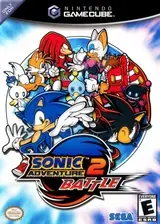
Sonic Adventure 2 is a 3D platform game divided into two campaigns: Hero and Dark. In the Hero campaign, players control Sonic, Tails, and Knuckles, who fight to save the world; in the Dark campaign, players control Shadow the Hedgehog, Doctor Eggman and Rouge the Bat, fighting to conquer it. Each campaign cycles through levels of its three characters, telling different sides of the story. Levels have a variety of themes (such as cities, jungles, desert pyramids and outer space), with some followed by boss fights. The two campaigns' stories occur in parallel; completing both campaigns unlocks a final story with all six characters, culminating in a final boss fight.
Sonic and Shadow's levels are fast-paced and emphasize platforming. Their homing attack can lock on to robots created by Eggman and GUN, and they can grind on rails. Tails's and Eggman's levels are slower and oriented towards multidirectional shooting; they are confined to mechs in which they can jump short heights, hover and shoot enemies. Knuckles's and Rouge's levels feature open exploration with treasure hunting; in each level, they must find three shards of the Master Emerald.
Their search is guided by radar and puzzle-based clues from harmless robots. Knuckles and Rouge can glide, defeat enemies with punches and kicks, and scale walls, digging into them to find power-ups.
Adventure 2 has the health system found in many other Sonic games. The player collects rings scattered throughout the levels; being hit by an enemy while holding rings causes the player to drop them all, while being hit without rings causes them to lose a life. Tails and Eggman have health bars, which are slowly refilled by collecting rings. Dying with no lives results in a game over screen. The characters can obtain permanent upgrades that grant them new abilities; for example, one upgrade allows Sonic and Shadow to dash along a sequential trail of rings to reach distant platforms, one gives Tails and Eggman hover jets that slows their descent to cross large gaps, while another lets Knuckles and Rouge dig into the ground to uncover treasure and Master Emerald pieces.
Separate from the main campaigns, the player can raise Chao as virtual pets. They have five attributes (Swim, Fly, Run, Power and Stamina) and a moral continuum from Hero to Dark. From the moment they hatch, their stats can be increased with Chaos Drives or small animals, found in the main stages, which empower them to compete in karate and racing minigames. Their alignment gradually changes based on their affection for the characters; for example, a Chao which likes Tails will gradually become more heroic.
Playing with Chao increases affection, and when a Chao becomes fully Hero or Dark, it assumes that form permanently. Although Chao eventually die, if they receive enough affection during their lives they reincarnate.
Adventure 2 has 180 emblems, earned for a variety of tasks. Each level has five missions; only the first is required to continue the campaign, and other missions include completing a harder version of a level and collecting 100 rings. The player earns emblems by completing missions and other tasks, many related to Chao raising. Collecting all the emblems unlocks a 3D version of the Green Hill Zone stage from the original Sonic the Hedgehog.
The game has several two-player modes. Players may race on foot through new (or altered) levels, have shoot-'em-up battles in mechs, hunt for Master Emerald shards or race in go-karts. A few characters are playable in these modes, but not in the main game; Tikal and Chaos from the original Sonic Adventure are playable in the treasure-hunting game, as are Amy Rose and Metal Sonic in the foot-racing levels and mechs piloted by Chao and Big the Cat (replaced by a Dark Chao in Battle) in the shooting levels.
Story
Doctor Eggman learns of a secret weapon from the diary of his deceased grandfather, Professor Gerald Robotnik, and infiltrates a high-security Guardian Units of Nations (GUN) facility to revive it with a Chaos Emerald. The weapon—Shadow, a black hedgehog who proclaims himself the "Ultimate Lifeform"—offers to help Eggman conquer the world, telling him to rendezvous at an abandoned space colony, the ARK, with more Chaos Emeralds. Shadow has vowed to fulfill a promise he made to his friend, Eggman's cousin Maria, before she died; the amnesiac Shadow interprets the promise as one of revenge. Shadow steals a Chaos Emerald, and GUN arrests Sonic after mistaking him for Shadow.
Knuckles encounters Eggman and Rouge, a government spy, attempting to steal the Master Emerald. He stops them by shattering it and searches for the scattered shards to repair it. Rouge follows Eggman to the ARK, where Shadow shows Eggman the Eclipse Cannon, another weapon created by Gerald. Shadow plans to charge the cannon with the seven Chaos Emeralds and use it to take over the world.
Rouge offers her services and gives Shadow and Eggman another Chaos Emerald to gain their trust. Tails and Amy infiltrate GUN's base and rescue Sonic, while Rouge retrieves three emeralds from the base before Eggman destroys it. Eggman makes a global broadcast in which he threatens to destroy the planet if he is not accepted as Earth's ruler in a day. He demonstrates the cannon's power by destroying half of the Moon.
Sonic, Tails, and Amy meet up with Knuckles and use a Chaos Emerald to track the others to the ARK.
Knuckles separates from the group and finishes repairing the Master Emerald. On the ARK, Tails gives Sonic a counterfeit Chaos Emerald to destroy the Eclipse Cannon. As Sonic is about to use it, Eggman captures Tails and Amy, forcing Sonic to return and rescue them. Sonic tries to trick Eggman with the fake emerald, but Eggman deduces the plan and jettisons him in an escape pod rigged with explosives.
Sonic uses the power of the fake emerald to escape; Eggman sneaks away with the last emerald and arms the Eclipse Cannon. The ARK suddenly starts falling, and a prerecorded message from Gerald is broadcast globally: he programmed the ARK to collide with Earth if the emeralds were used, a retaliation against the government for condemning his research and killing his colleagues, including Maria. Everyone but Shadow works together to access the cannon's core and neutralize the ARK using the Master Emerald.
Amy pleads for Shadow's help, and he remembers that he promised Maria to help mankind, not destroy it. Shadow joins Sonic and Knuckles in the core as they encounter the Biolizard, a colossal lizard and prototype Ultimate Lifeform. Knuckles deactivates the Chaos Emeralds with the Master Emerald, but the Biolizard fuses with the cannon to continue the ARK's collision course. Sonic and Shadow use the emeralds to transform into their super forms, destroy the Biolizard, and put the ARK back into a stable orbit.
This depletes Shadow's energy and he plummets to Earth, content in fulfilling his promise to Maria. The people on Earth celebrate as the group returns, and Sonic bids Shadow farewell.
Development
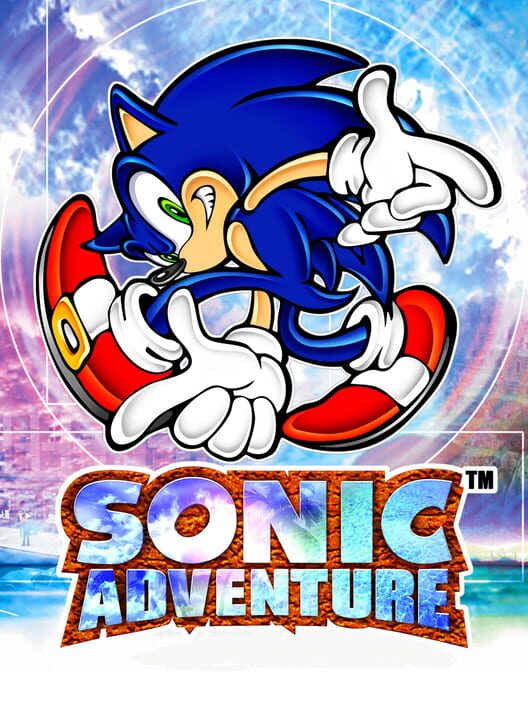
Sonic Adventure, the first 3D platformer in Sega's Sonic the Hedgehog franchise, was developed by Sonic Team and released for the Dreamcast in Japan in 1998. Although the game was a critical and commercial success, Dreamcast sales struggled to meet Sega's expectations. The Adventure team was downsized, and Sega relocated Adventure's director, Takashi Iizuka, to San Francisco, California, to establish Sonic Team USA. Sega wanted to repeat the pattern of developing a game in Japan and its sequel in the US as it had done with the original Sonic and Sonic the Hedgehog 2 (1992). Only 11 staff members—significantly smaller than Adventure's team of 120—joined Iizuka, and they began working on Sonic Adventure 2 after they spent six months localizing Adventure for the West.
Shiro Maekawa, who wrote portions of Sega's Panzer Dragoon Saga (1998) and joined Sonic Team during Adventure's production, conceived and wrote Adventure 2's story. Maekawa accepted the role after he learned that he did not need to be an artist to create a story or storyboards. Because Adventure 2 would be the first Sonic game released during the 21st century, Maekawa wanted a substantial portion of the story to take place in space. The rest of Sonic Team was apprehensive, but Maekawa convinced them.
Maekawa drew influence from the manga and anime he had enjoyed since childhood, including Please Save My Earth (1986–1994). As Maekawa disliked Sonic as a character, he used Adventure 2 as an opportunity to revise him to suit his tastes.
Among Sonic Team's unimplemented Adventure concepts was a black hedgehog who rivaled Sonic's coolness. The idea was revived during Adventure 2's brainstorming sessions. The rival was initially villainous, but Iizuka decided to appeal to American audiences with an antihero, a popular archetype in the US. He cited the Image Comics character Spawn as an influence.
Maekawa struggled to develop the concept until writing lines for a scene in which Sonic confronts the hedgehog for impersonating him. Maekawa settled on a delicate, pure character who would refer to himself using the more humble Japanese pronoun boku (僕). He was originally named Terios the Prisoner, but was renamed Shadow after another new character, a bat, who became Rouge. Sonic Team saw Shadow as a one-off character who would not appear in subsequent Sonic games.
As with the first game, Adventure 2 was directed by Iizuku and produced by the Sonic co-creator Yuji Naka. Development lasted around a year and a half, and a total of 15 or 16 people worked on it. Three or four staff were recruited from Sega's arcade game division. Iizuka said that the team had to change their work ethic and prioritize efficiency to adapt to the reduced manpower. He recalled: "Each member of the staff had to be as efficient as possible, using the smallest amount of time and money they could!"
Iizuka summarized Sonic Adventure 2's development as "trying to make the impossible possible", as Sonic Team USA had to overcome the challenge of creating a game comparable in scope to the first Adventure with less than a tenth of the staff. Despite this, he considered Adventure 2 the most fun Sonic game to develop, as the small team meant "we were able to condense all the good elements from the previous game, and deliver a story and game that was satisfying to players everywhere". Due to the smaller staff, Sonic Team USA split Adventure 2 into two campaigns featuring character teams instead of Adventure's format of six starring individual characters. Adventure 2 uses the same game engine, with improved texture quality and collision detection.
Sonic Team designed Adventure 2 as faster and more action-oriented compared to the slower, more story-focused Adventure. Whereas Sonic Team had tried to include as much content as possible in Adventure, for Adventure 2 they concentrated on the elements they deemed necessary. Iizuka noted that players who prioritized action found much of Adventure's content pointless, so Sonic Team USA sought to streamline the experience while retaining Adventure's "bulkiness". They removed the hub worlds in favor of linear level progression more in line with the older Sonic games, and divided action and exploration sequences among the characters rather than mixing them. Each level was tailored for its character, and unlike Adventure, in which some playable characters had short campaigns, all six Adventure 2 characters have roughly equal gameplay time.
Iizuka said Adventure 2 was designed to have "more of an American flavor" than Adventure, since it was developed in the US. The art director, Kazuyuki Hoshino, noted Sonic was a character designed to appeal to Western sensibilities, and working in the US allowed Sonic Team USA to capture an American atmosphere more successfully. The levels, drawn from Maekawa's story and setting, were inspired by American locations such as Yosemite National Park (where the team vacationed) and the San Francisco Bay Area. Iizuka said they did not intend to "create a simulation of San Francisco" but rather to reflect the influence of their surroundings.
The staff frequently received parking tickets from authorities; as a joke, they included the authorities' cars in a level where Sonic could destroy them. The month Adventure 2 was to be released to manufacturing, one artist suggested adding Green Hill Zone, the original Sonic the Hedgehog's first stage. Iizuka liked the idea but expected the rest of the team to object, so he, the artist, and a programmer spent a week working on it separately.
Among Sonic Team USA's goals were a frame rate of 60 frames per second (FPS) to make the gameplay feel faster and a multiplayer mode. Achieving 60 FPS required some design tweaks, but Naka said Sonic Team's experience with the Dreamcast hardware made it possible. He felt that by then, Sonic Team had "gotten to the point where we can tap the full power of the console and deliver a much better experience to users". Sonic Team USA gave
Reception
Sonic Adventure 2 received "generally favorable" reviews. Critics appreciated its multiple playing styles. According to Edge and Four-Eyed Dragon of GamePro, the three styles and bonus features such as Chao gardens were engaging. Johnny Liu of GameRevolution praised its replay value of multiple playing styles and 180 different goals.
Anthony Chau of IGN called it one of the best Sonic games: "If this is the last Sonic game in these declining Dreamcast years, it's satisfying to know that the DC didn't go out with a bang, but with a sonic boom." In 2022, IGN named it one of the best Dreamcast games.
The camera was panned. Shahed Ahmed of GameSpot criticized the "cardinal sin" of 3D platform games: forcing players to jump to an out-of-frame platform. Although players can re-orient the camera with the trigger buttons, it reverts when the character moves. According to Chau and Liu, this made searching cramped sections of Knuckles' and Rouge's levels frustrating. Edge found camera problems permeating the game, with no significant improvement from Adventure.
The visuals received positive reviews. Liu called them "sweet, sweet eye-crack". Four-Eyed Dragon wrote that the game "is simply jaw-dropping beautiful," citing its detailed backgrounds and scenery and the characters' extensive color palettes. According to Chau, the game had "some of the best textures ever seen" and was one of the most beautiful Dreamcast games. Edge was impressed by the texture detail and draw distance, and Chau, Liu and Ahmed praised its 60-frame-per-second rendering speed.
Senoue's soundtrack also received positive reviews. According to Ahmed, the music was an improvement over Adventure's "campy glam-rock and J-pop soundtrack", with less emphasis on lyrics, while Liu appreciated its more "understated" approach. Four-Eyed Dragon called the music "an eclectic mix of orchestrated masterpieces, guitar tunes, and melodic hip-hop voices" that "gracefully fill the game's ambiance to a perfect pitch." Reactions to the voice acting were divided; according to Ahmed, "the voice acting, and the lip-synching in particular, is executed quite well," and Liu and Chau found the English voices inferior to the Japanese ones.
The plot was derided, although its presentation was well received. Ahmed wrote, "Throughout the game the plot becomes more and more scattered and lackluster," not focusing long enough on one element to execute it meaningfully. Although Liu agreed that despite the game's ambitious scope and themes it failed to advance the series' core plot beyond the Sega Genesis Sonic games, Edge appreciated the story's presentation from both perspectives: hero and villain.
Despite high review scores for the Dreamcast version, the GameCube version released six months later received mixed reviews: respective Metacritic and GameRankings scores of 73 percent and 72.33 percent. Critics generally felt that it was not significantly improved from the Dreamcast original. However, Shane Bettenhausen of GameSpy saw Adventure 2 Battle as noticeably superior; in addition to its upgrades, its action was better suited to the GameCube's controller than the Dreamcast's.
Sonic Adventure 2 received several accolades, including the 2001 IGN's Editors' Choice Award. ScrewAttack called it the fifth-best Dreamcast game, and GamesRadar rated it the tenth-greatest Dreamcast game out of 25: "Despite trailing off significantly in recent years, the 3D side of the Sonic the Hedgehog franchise had a surprisingly stellar start with the Sonic Adventure entries, and the 2001 sequel really amped up the action." In February 2014, IGN's Luke Karmali called Battle his tenth-favorite game of all time. In a video interview with Sonic Team studio head Takashi Iizuka, he says Sonic Adventure 2 is his favourite game in the series.
Legacy
Sonic Adventure 2 is frequently ranked among the best Sonic games. GameSpot and Kotaku deemed it a satisfying conclusion to Sonic's run on Sega hardware, and Game Informer considered it a worthy sequel to Adventure. However, journalists have characterized Adventure 2 as divisive, and the 2012 rerelease received "mixed or average reviews" according to Metacritic. Some fans regard Adventure 2 as the franchise's pinnacle, but others find it unfocused—"a jack of all trades, master of none", as The Escapist wrote. According to The Escapist, "depending on who you ask, [it] represent[s] the franchise at its best and at its worst."
Common elements of retrospective praise include Sonic and Shadow's levels, the Chao Garden, and the soundtrack. GamesRadar+ felt Adventure 2's increased speed and emphasis on spectacle positively influenced the series. Conversely, its focus on multiple characters with different gameplay styles has been divisive. While IGN praised the gameplay variety, Kotaku noted that many only like the Sonic and Shadow levels; retrospective reviewers have criticized the other characters as frustrating and cumbersome.
Game Informer found Tails and Eggman's levels fine, but Knuckles and Rouge's annoying. Nintendo Life disagreed, writing Knuckles and Rouge were "entertaining enough" while Tails and Eggman were "rubbish". To TechRadar, the gameplay variety meant the quality of levels fluctuated more than it did in Adventure, though Sonic and Shadow's levels were a significant improvement. Kotaku appreciated the other characters' levels for their immersion, despite their poor quality.
Additional criticism has been directed at the camera for obscuring enemies and platforms, poor voice acting and audio mixing, and the story. The audio mixing, in which characters' dialogue in cutscenes frequently overlaps, has been described as infamous. The Escapist and VentureBeat called the story nonsensical, Destructoid said it "almost feels like work to get through", and Vice jokingly compared it to a Bob Books take on Armageddon. Nintendo Life felt the plot would have been interesting were it not for the plot holes caused by events playing out differently across campaigns.
-evil presentation as clever and adding unexpected nuance to the villains' motivations, and Rock Paper Shotgun said the story was one of Sonic's best despite some melodramatic moments. They highlighted the scene in which Eggman destroys the Moon as considerably more impactful than his schemes in later games.
VentureBeat wrote that Adventure 2 did not hold up to modern standards, finding its camera and reliance on trial-and-error design outdated, and Destructoid said it was only redeemed by how engaging the Chao Garden was. A Vice writer, while playing Adventure 2 for the first time in a decade, said that "[I've] been forced to reconcile my nostalgia with the harsh reality that it is not a terrific game". VentureBeat wrote that it was more worth remembering for its historical significance as the last Sonic game for a Sega console than it was worth replaying. Others conceded that Adventure 2 is flawed, but argued this was negated by its merits.
Nintendo Life said Adventure 2's many "bizarre design choices" made it endearing, and Kotaku said it "felt equal parts triumphant and bittersweet... Adventure 2 has plenty of flaws, but you can tell Sonic Team was working hard to build off the best parts of its previous Adventure and play out Sega's home console era with style."
Following Adventure 2, Sonic's critical standing began to decline, which VentureBeat attributed to Sega "depending on stupid gimmicks to sell their most iconic property" following the third-party transition. The Escapist wrote that subsequent Sonic games, such as Sonic the Hedgehog (2006), Sonic Unleashed (2008), and Sonic Forces (2017), attempted to replicate the Adventure 2 format of varied gameplay styles, but failed because they did not develop each style fully. VentureBeat said Adventure 2's alternate gameplay styles were natural additions to Sonic whereas those in subsequent games, such as Unleashed's Werehog segments and Sonic and the Black Knight's (2009) swordplay, were not.
Sonic Adventure 2's first level, City Escape, has been described as one of the best opening stages in a video game. The level, which serves as a tutorial, depicts Sonic as he escapes GUN and features sequences in which he snowboards through streets and outruns a murderous truck. Red Bull said it was "unquestionably Sonic's finest hour since the [Genesis] days", and Destructoid called it a perfect introduction to modern Sonic gameplay that encapsulates the strengths of the Adventure games. USgamer wrote that Adventure 2 is remembered more for City Escape than anything else, and Polygon said that it "represents the epitome of Sonic the Hedgehog. It's fast-paced, full of secret pathways, and more than a little absurd."
Polygon considered "Escape from the City", the City Escape theme song, the peak of the Sonic franchise, with an energetic composition and hopeful lyrics that encapsulate Sonic's character. The song was remixed in Sonic Generations (2011) and featured in the Mario & Sonic at the Olympic Games and Super Smash Bros. series of crossover games. Senoue and the band Hyper Potions produced an Irish-themed remix for a collaboration between Jacksepticeye and the Sonic social media team on St.
Patrick's Day 2020. Sega produced two remixes in 2021: a Sonic 30th Anniversary Symphony remix in June and a funk remix in December. The original is a selectable song in Sega's Samba de Amigo: Party Central (2023), a rhythm game which includes a City Escape-based stage. Poley described "Escape from the City" as his biggest hit, though he does not receive any royalties.
Generations, which commemorates the franchise's 20th anniversary, features reimagined versions of levels from past Sonic games, including 2D and 3D reimaginings of City Escape. The 2D version f